
The founder's story
The tool I wish we had
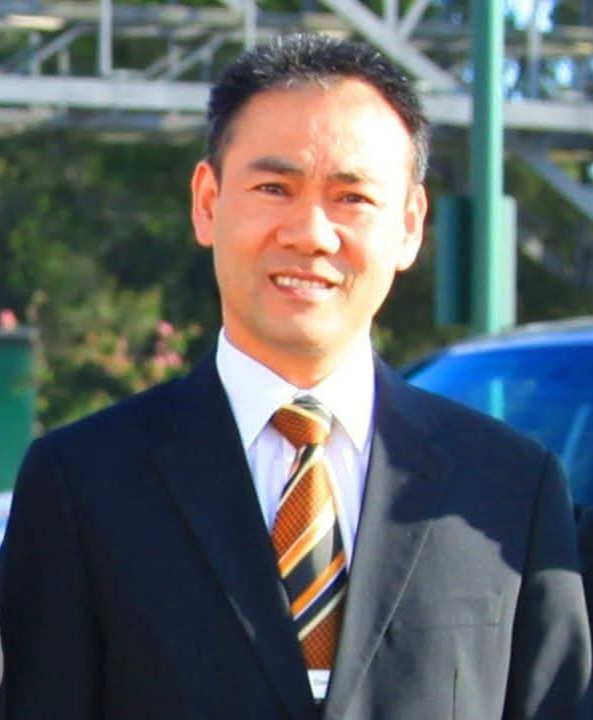
The Boat I was fourteen when I escaped Vietnam on a small wooden boat with 120 people crammed aboard. I didn't know where we were going, or if we would get there. Six people didn't survive the voyage. There was nowhere to lay them to rest, and we had no choice but to let their bodies go into the sea. I was just a boy, and I have carried those moments with me ever since. They taught me, earlier than anyone should have to learn it, how fragile life is and how precious a second chance can be. We reached Pulau Bidong, a refugee camp off the coast of Malaysia. Then, in 1982, I arrived in Australia with no English and no map for the life ahead of me. What I had was the will to survive and the determination to learn. I learned English here, word by word and shift by shift. Every new word was a small win, and I held on to every one. Years later, I would bring that same quiet determination to the showroom floor. --- If You Don't Sell, You Don't Eat I left school early and took whatever work I could find. One of those jobs was selling Kirby vacuum cleaners, door to door and cold calling, on commission only. It was brutally hard. I knocked on door after door and heard no after no. If you didn't sell, you didn't eat, and some days I barely did. But every closed door taught me something about people, about rejection, and about getting back up. I learned very quickly that nobody in this country was going to hand me anything. If I wanted a future, I would have to build it with my own two hands. --- Tania's Idea In 1991, I was twenty-three and had just married Tania, the love of my life. I had arrived in this country with no one to call family. Now I had a family of my own. We had very little, but we had each other and a future to build. One evening, after another long day of knocking on doors without any result, Tania looked at me and said: "Why don't you try selling cars? The customers come to you." I remember looking at her and saying, "You're a genius. Let's do that." That one sentence changed the course of my life. It sounded casual, but it pointed me to an industry I had completely overlooked. Tania believed in me before I believed in myself, and I couldn't have done any of this without her. Every sale, every promotion, and every award in this story has her fingerprints on it. At first, the goal was simple: pay the rent and put food on the table. The reality was harsh. There was no roadmap to a sale and almost no guidance from management. Every morning, the team walked into the sales meeting forcing a smile, and every morning they walked out a little more deflated. Nobody warned you about the rejection waiting on the lot, or how it felt to come home after another day with nothing to show for it. But I had already survived the escape from Vietnam and a hundred closed doors. And Tania had never stopped believing in me. So I made a promise. If I was going to make it, I would have to rely on myself. --- The Weekend That Changed Everything The lesson that shaped my whole career came in my first year, at Jubilee Hyundai in Five Dock. It was a Saturday, and the showroom was packed. Customers filled every desk and every corner of the lot, all waiting for someone to help them. I was young and hungry, and I wanted to help every one of them, so I tried to serve them all at once. I rushed from one person to the next and cut conversations short. Every customer got half of me, and every one of them could feel it. I went home that night exhausted, with average results and a sinking feeling that I had let them down. The next weekend, I tried something different. I blocked out the noise. I gave the person in front of me all of my attention, as if nothing else in the world existed until they walked out the door. Everything changed. The customers felt it and so did I, and my results improved dramatically. A bird in the hand is worth two in the bush. That weekend taught me that serving one customer at a time, with your whole heart, beats juggling many with half of it. I have carried that lesson for more than thirty years. It became how I sold, how I led, and eventually the heart of Vorbit. --- The Climb I couldn't afford to fail, so I bought the bestselling books by Tom Hopkins and Zig Ziglar and studied them late into the night. For a young man still mastering his second language, every page took effort. I read them like my future depended on it, because it did. Slowly, the hard work paid off. I moved dealerships and the results followed. Then came something I never planned for: management. When I became Assistant Manager, I realised my job had changed. I wasn't only selling cars anymore. I was helping people become the best versions of themselves. Every role after that was bigger, but at heart the job never changed: help the person in front of me get better at helping the person in front of them. That belief carried me all the way to General Manager. I spent three decades in this industry, including eighteen years with Peter Warren Automotive and thirteen at Peter Warren Toyota. Then one year, at the national awards, they called my name: National Top Achiever of the Year. Holding that first national trophy, I felt immensely proud—not just of the recognition, but of what it represented. All the years of grit, the laser focus, and the unwavering dedication to putting the customer first had finally paid off. More awards followed for consistently beating Toyota Australia's targets, but nothing ever felt quite like that first one. That trophy told me the path we chose was the right one. But looking back, the achievement closest to my heart had less to do with the trophies on the shelf and everything to do with the people beside me. By the time I became Sales Manager at Peter Warren Toyota, I had spent half my career on the front line. I had been the number one salesperson many times. I had also watched leaders who lifted their teams up, and leaders who quietly broke them. I knew exactly how each kind felt. So I promised myself that when it was my turn to lead, I would create the workplace I had always wished for: somewhere people felt valued, wanted to show up, and wanted to stay. For two years, we were the underdogs. Nobody expected much from us. I poured everything into my team. I taught them the best road to a sale and the power of serving one customer at a time. I told them that if they wanted heat, they first had to add the wood. But the thing they remember most wasn't a lesson. It was that I was always there. I told them: before you let a customer walk out the door, come and brief me first. Tell me who they are, what they're looking at, where things stand. Then I'll walk over to your desk and have a chat with them. I called it the Double Close. There was always something I could say — a question to answer, a hesitation to clear, a perspective the customer hadn't heard yet — that helped them move forward. Most of the time, all they needed was to hear it from someone else. This was new to my team. The manager before me stayed in his office and rarely spoke to customers. So when I told them I would be there whenever they needed me, they weren't sure whether to believe it. Then they watched it work. And belief started to spread. They began to use the Double Close more and more. The results spoke for themselves. But I knew a team isn't built only on the showroom floor. We exceeded target after target, and every time we did, we celebrated together over dinner. It happened so often that team dinners became a regular part of life, maybe a little too regular. I spared nothing, because they deserved every bit of it. When I heard some partners were starting to wonder why we were out so often, I told the team, "If anyone needs a permission letter, I'll write one to your spouse." We laughed about that for years. I believed then, and I still believe now, that the team that plays together stays together. In a dealership, nothing happens until a salesperson sells a vehicle. The sales team holds everything up, and if it falls, the whole dealership falls with it. A process alone isn't enough. People need to feel they belong, that they're part of a family. I arrived in this country with no family at all, so I know better than most how much that belonging means. Those dinners became the highlight of our year. Even now, years later, my old team still talks about those good old times. Every time I hear it, it warms my heart. Twice, we were named the best sales team in the country. Both times, the same scene played out — our people called up one by one for their own categories. And afterwards, once the formalities were done, the whole team came together for one photograph. Looking at the faces of the people I had worked beside and believed in, I couldn't find the words. We hadn't just been lucky. With the right people and the right process, a group of underdogs had risen to the top. Even that wasn't the moment that meant the most to me. The moment I will carry for the rest of my life was when my team told me Peter Warren Toyota was the best place they had ever worked. They said it didn't feel like work, and that as long as I was there, they would never leave. No trophy has ever come close to that. It wasn't about anything I had achieved. It was about what we had built together, and how it made them feel. It taught me a truth that applies to any business, anywhere. Three things matter: the people, the process, and the product. Take care of all three and you can take a team all the way to number one, just like we did. "Once is an achievement. Twice is a system." --- The Quiet Night In March 2023, at fifty-four, I retired, financially independent. There was no inheritance and no stroke of luck. It came from years of hard work: beating targets, living within our means, and investing carefully. After thirty years on the dealership floor, I had nothing left to prove. The freedom was everything Tania and I had dreamed of. We finally had time together and with our family, and no targets, no pressure, no alarm clock. We filled the next three years with holidays, restaurants, movies, and long days at the beach. It was just long enough for me to learn something I never expected. "Comfort is not the same as purpose." One night, I lay in bed, wide awake, with Tania asleep beside me. The house was quiet. The kids had grown up and moved out, and it was just the two of us in a home that used to be full of noise and life. My phone sat silent on the bedside table. There were no missed calls, no meeting reminders, and no team checking in. My career was over, and I was financially free. By every measure, my life was complete. So why did it feel like something was missing? I lay there thinking about how far I had come. I had been a fourteen-year-old boy alone on a wooden boat. Now I was a husband, a father, and a General Manager in the country that took me in. None of it would have been possible without the motor industry, the industry Tania pointed me towards with one simple question. It gave me a career, a purpose, a family of colleagues, and the freedom we now enjoyed. It gave me everything. In the quiet of that night, one question wouldn't let me go: how could I give back? The answer came clearly, and it came from my heart. --- Why I Built Vorbit Vorbit is my way of giving back. I came out of retirement to build it because, in my entire career, a tool like this never existed. It broke my heart to watch good salespeople lose deals to bad systems. I watched managers flying blind, and customers falling through the cracks. Nobody was lazy or didn't care. The tools were simply never built for the way we actually work. That problem still exists today. Most CRM software is built by IT teams who have never stood on a showroom floor. They have never had four customers waiting, three follow-ups overdue, and a good deal slipping away because someone forgot to call back. They have never driven home knowing they lost a sale they should have won. I have, more than I can remember. So I built Vorbit from first principles. The best part is no part. The best step is no step. Every feature is there because a salesperson needed it, not because a developer thought it would be clever. At the heart of it is the same lesson I learned on that busy weekend in Five Dock, more than thirty years ago: One customer at a time. Vorbit Intelligence sorts your opportunity list and surfaces your highest-priority customer to the top. No searching. No guessing. You always know exactly who to call. Every call, text, and email is time-stamped and logged on a single timeline, along with every photo, video, and note on the customer's profile, ready the moment you need it. When you're with a customer, you can give them your full attention, because Vorbit remembers every detail for you. This is what I wish we had on the showroom floor all those years ago: real fixes for real problems. Most CRMs give you a list and call it a system. Vorbit tells you which customer to call. This is my way of saying thank you: to the country that gave me a second chance, to the industry that gave me everything, and to my wife for saying, "Why don't you try selling cars? The customers come to you." Vorbit. Built so the next generation never loses their way. — Steve Vo, Founder